Best Ice Baths and Cold Plunge Tubs for UK Gardens (2026)
Cold water has gone from a fringe habit to a fixture of British gardens. Walk down a coastal street now and you will spot a barrel or a black insulated tub tucked beside a shed. The appeal is simple: you get the bracing post-swim feeling without driving to the sea, and you control the temperature.
This guide covers what matters when buying an ice bath for a UK garden in 2026: the main types, real prices from current suppliers, and the running costs nobody mentions. Every product and price below was checked against the maker’s live listings.
What counts as an ice bath, and what to ignore
The phrase “ice bath” covers three very different things, and the marketing blurs them on purpose.
- Insulated tubs and pods. A barrel-shaped or round container with thick walls that hold cold water (and ice) for hours. You fill it from a hose, drop in ice or run a chiller, and climb in. Most home buyers start here.
- Chiller systems. A separate unit, like a small fridge for water, that pumps and cools the tub so you never buy bagged ice again. Sold on its own or bundled.
- Plunge pools with built-in cooling. Permanent or semi-permanent units with an integrated chiller, filtration and a fixed temperature you set on a dial. The premium end.
Ignore anything sold as a “cold therapy tub” that is really a thin single-skin paddling tub with no insulation. Without insulated walls and a lid, your ice melts in under an hour.
The main types compared
Inflatable insulated pods
These are the entry point for most people. They pack down, store in a cupboard over winter, and cost less than a weekend away.
The LUMI Recovery Pod is the model most often copied. It measures 75cm across and 75cm tall, holds 320 litres, uses three insulated layers and a thermal lid, and is rated for users up to 6‘9”. At the time of writing it shows as “Back Soon” on Lumi’s own site, with the larger Pod MAX Ultra positioned as the replacement, so check stock before you set your heart on it.
The Myomaster MyoIce is a close rival at £65 from Myomaster directly. It is wider in plan at 90cm by 75cm, holds 300 litres, sets up in about five minutes and ships with an air pump, hosepipe connector, carry bag, structural poles and an all-weather cover. The wider footprint suits people who want to sit with knees up rather than hugged to the chest.
Both sit in the same bracket. If you are tall, prioritise depth and height rating. If you want room to move, prioritise the wider plan. For a first tub under £100, either is a sensible buy.
Wooden barrels
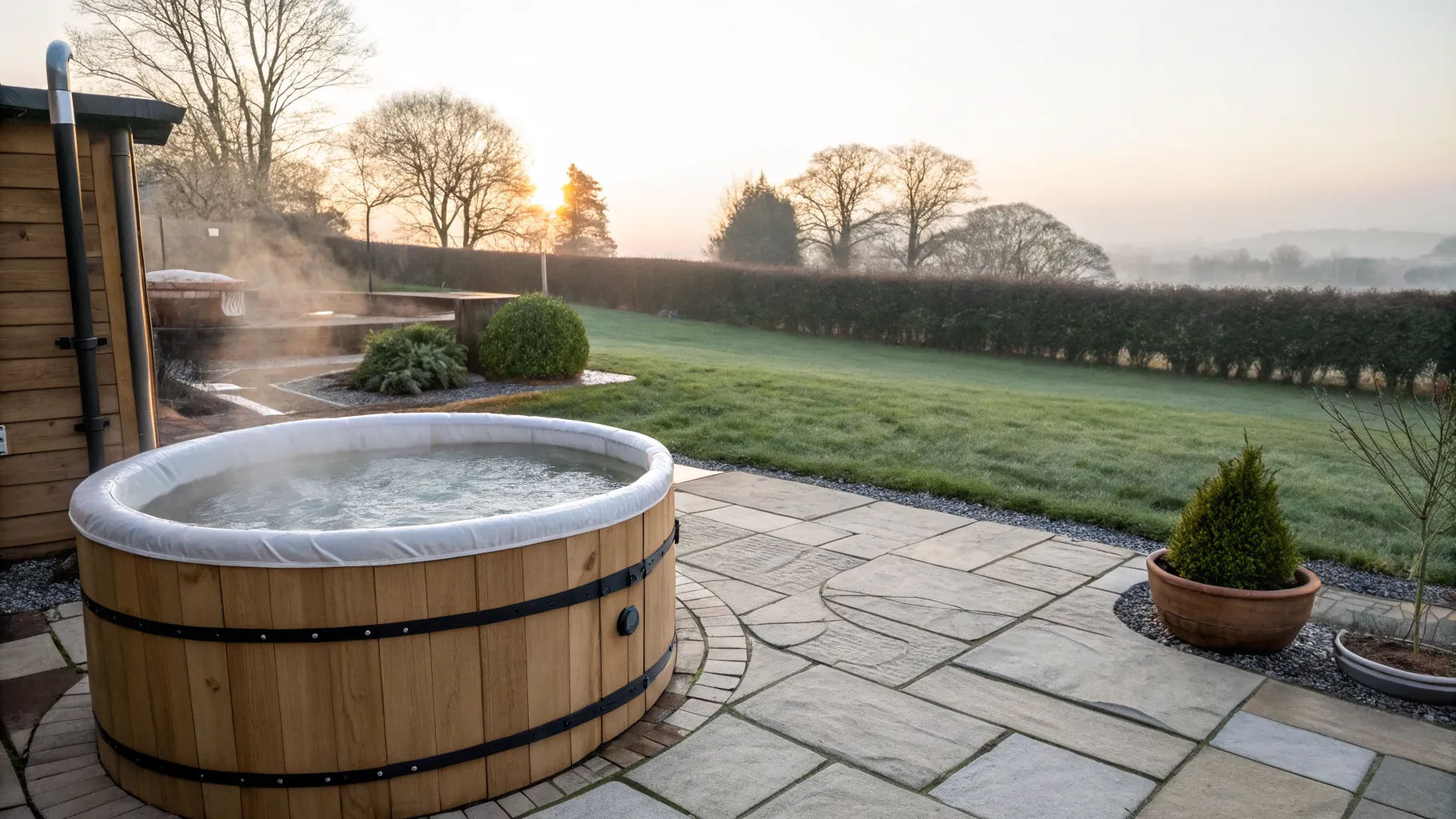
A repurposed oak whisky or wine barrel is the aesthetic choice, and it looks the part beside a garden room or decking. These are heavier, hold water by the swelling of the staves, and need a little seasoning when they first arrive.
UK coopers price them by barrel size. The Barrel Makers list ex-distillery oak ice bath barrels from around £200 including VAT for the 450-litre size, with the larger 400-litre plunge pool nearer £290. Celtic Timber and Whisky Barrel Brothers offer similar authentic-barrel options, often with a lift-off lid cut from the original barrel top and a drainage tap fitted.
The trade-offs are real. Wood holds cold less efficiently than a triple-layer insulated pod, it needs to stay damp so the staves do not shrink and leak, and a full barrel is not moving once filled. Buy a barrel for looks and longevity, not for portability.
Chiller-equipped plunge systems
This is where cold water gets expensive and convenient at once. A chiller removes the biggest hassle of home cold therapy: sourcing ice every day.
Myomaster’s MyoChill sells for £449 and cools water as low as 3°C with built-in micron filtration, supporting up to 600 litres and working with most leading tubs. The upgraded MyoChill+ is £999 and reaches around 1°C with ozone cleaning that, the company says, keeps water usable for up to eight weeks. Myomaster quotes running costs of roughly 15p a day. Treat manufacturer running-cost figures as a best case; your actual bill depends on target temperature, air temperature and how often you plunge.
A chiller turns a £65 tub into a proper home cold-plunge station for around £514 all in. For anyone using the tub daily through summer, when ice melts fastest, the maths starts to favour a chiller within a few months.
How to choose: a quick decision path
- Plunging once or twice a week, tight on space: an inflatable insulated pod and bagged ice. Lowest cost, easy to store.
- Daily user who hates buying ice: an insulated tub plus a chiller. Higher upfront cost, lowest ongoing faff.
- Want it as a garden feature that lasts years: an oak barrel, accepting the maintenance and the weight.
- Tall or broad: check the height rating and plan dimensions first. A pod that is too short means you cannot get your shoulders under.
If you are also weighing up a sauna to pair with your plunge for proper contrast therapy, our home and barrel sauna buying guide walks through the same trade-offs on the hot side.
Running costs and the things suppliers skip
The sticker price is the start, not the end.
- Ice. Without a chiller, bagged ice from a supermarket adds up fast in summer. Most people who plunge more than twice a week end up buying a chiller or accepting lukewarm sessions in July.
- Water and filtration. A pod without filtration needs draining and refilling regularly, especially after sweaty post-gym use. Chillers with filtration and ozone stretch a fill to several weeks.
- Electricity. Any chiller draws power continuously to hold temperature. The quoted pennies-per-day figures assume mild conditions; budget more in a hot spell.
- Siting. Stand the tub on a level, firm base. A full 300-litre tub weighs roughly 300kg with you in it. Soft lawn sinks and tilts; a paved patio or paving slab base is the safe choice.
Safety: this part is not optional
Cold water is a genuine physiological stressor, not just an uncomfortable one. The British Heart Foundation is clear that entering very cold water can trigger a “cold shock” response causing a faster heart rate, higher blood pressure and shortness of breath, and that colder water makes the heart work harder. It can also raise stress hormone levels and increase the risk of abnormal heart rhythms (arrhythmias).
A few practical rules:
- If you have any heart condition or high blood pressure, speak to your GP before starting. The BHF advises discussing the risks with a doctor or nurse specialist first. Pregnant women should take the same advice.
- Never plunge alone when you are new to it, and never after alcohol.
- Get in gradually and control your breathing. The first 30 seconds, when the gasp reflex hits, are when people get into trouble.
- Keep early sessions short. A couple of minutes is plenty to begin with.
- Have a warm towel and dry layers ready at the side before you get in.
You can read the full guidance on the British Heart Foundation’s cold water swimming page before you buy anything.
The short version
For a first tub on a budget, an inflatable pod like the MyoIce at £65 or a LUMI Recovery Pod, stock permitting, does the job for under £100. If you plunge most days and resent buying ice, add a chiller such as the MyoChill at £449. For a permanent garden feature, an oak barrel from a UK cooper from around £200 looks the part and lasts, if you are happy to maintain the wood. Whatever you choose, sort the base, the safety basics and the running costs before the tub arrives, not after.
Frequently asked questions
How cold should the water actually be? Most home plungers aim for somewhere between 8°C and 15°C, which is cold enough to trigger the response without being dangerous for a beginner. You do not need to chase single digits. Start at the milder end, build tolerance, and use a thermometer rather than guessing.
Do I really need a chiller, or is ice enough? Ice is fine if you plunge once or twice a week and do not mind the cost and the trips to the shop. If you plunge daily, especially in summer when ice melts within the hour, a chiller pays for itself in convenience and usually in money within a season. It is the upgrade most regular users wish they had bought sooner.
Can I leave an ice bath outside all year? Yes, with care. Insulated pods and barrels are built for outdoor use, but in a hard frost an empty pod can crack and a barrel must stay damp so the staves do not shrink and leak. Use the supplied cover, keep barrels topped up, and if a chiller is fitted, follow the maker’s winter instructions to protect the pump.
How much space and weight do I need to plan for? A typical tub is under a metre across, so the footprint is small, but a filled 300-litre tub weighs around 300kg with a person in it. Put it on a hard, level base such as a patio or a paving slab, not soft lawn, which will sink and tilt over time.
How long should each cold plunge last? Beginners should keep it to one or two minutes and build up slowly. There is no benefit to staying in until you are numb, and longer is not better. Listen to your breathing: once you can breathe slowly and calmly, you are getting the adaptation you are after.
Is a wooden barrel better than an inflatable pod? Neither is better outright. A barrel looks superb and lasts for years but is heavy, needs maintenance and holds cold less efficiently. A pod is cheap, light, packs away and insulates well but will never be a garden centrepiece. Choose on whether you value the look and permanence or the price and flexibility.
More from Baltic Spa
 Reviews
The Best Public Saunas in London for 2026, Tested and Ranked
We tested and ranked the best public saunas in London for 2026, from £9.50 community baths to Canary Wharf's 60-person contrast therapy hall.
 Infrared Saunas
Infrared Sauna Blankets: How They Work and Who They Suit
How an infrared sauna blanket works, what the layers and EMF claims really mean, who they suit and who should avoid one, from an evidence-first UK guide.
Sauna Stones Calculator: How Many Kg of Stones Do You Need?
Free sauna stones calculator: enter your electric heater's kW or your wood stove size and get the recommended stone weight in kg, plus how many boxes to buy.